





Cricket Shoes Explained: Spikes vs Rubbers, What to Buy & Mistakes to Avoid
Cricket shoes are one of the most important pieces of gear you’ll buy — you’ll spend hours on your feet, and the wrong pair can lead to slipping, sore heels, rolled ankles, or even serious injury. In this guide, we’ll break it down simply: spikes vs rubbers, which shoe suits your playing role, the buying mistakes to avoid, and how to make your shoes last longer.
If you’re browsing options now, start here: Cricket Shoes
Why specialist cricket shoe brands matter
Buying cricket shoes from a specialist shoe brand is like buying a high-end car and fitting cheap tyres — it just doesn’t make sense.
Specialist brands invest in:
- midsole cushioning and stability
- spike placement and outsole grip patterns
- heel support and ankle safety
- toe protection and durability for cricket-specific movements
If you want tried-and-tested options, explore specialist ranges like:
Spikes vs rubbers: what’s the difference?
Rubber cricket shoes (synthetic & training)
Rubber shoes are designed for synthetic wickets, astro, and net sessions. Synthetic surfaces are hard, so rubber shoes usually offer more cushioning — but they still need stability, otherwise you risk ankle injuries.
Shop here: Rubber Cricket Shoes
Do not wear rubbers on turf wickets — you’re more likely to slip, and you can damage the wicket.
Spike cricket shoes (turf only)
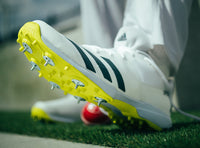
Spikes are made for turf wickets. Turf can be soft and porous, and spikes dig in to give you traction, stability, and confidence on impact — especially for bowlers.
Shop turf spikes here: Steel Spike Cricket Shoes
You’ll also want replacement spikes and tools over the season:
Which spikes should you buy? Match your shoe to your role
Batting, keeping & fielding spikes
These are lightweight and built for speed and agility. You want something that feels “snappy” so you can move quickly all day.
Browse: Batting & Keeping Spikes
Best for:
- specialist batters
- wicketkeepers
- fielders
Batting & spin bowling spikes
Batters and spinners need forefoot grip. You’re pushing off, twisting, pivoting, and changing direction constantly — that’s why traction at the front matters most.
A good batting/spin shoe should have strong forefoot grip, supportive cushioning, and stability through quick movements.
(If you’re not sure, start from the main range and filter by brand/price):
Cricket Shoes $90–$199 | Cricket Shoes Above $200
All-rounder & seam bowling (all-round spikes)
As an all-rounder or seam bowler, stability matters more — you’re landing harder and need the shoe to stay flat so you don’t roll your ankle.
Browse: All-Rounder Spikes
Specialist fast bowling spikes
Fast bowling shoes need to handle the biggest impacts in cricket. They should feel firm and stable under the heel, lock your foot in securely, and resist twisting.
Browse: Bowling Spikes
Sizing + fit: the most important factor
When your shoes arrive (especially if you buy online):
- wear the socks you play in
- walk around indoors for 5–10 minutes
- snug is good (shoes often ease slightly)
- if they’re painfully tight or your heel lifts, swap sizing ASAP
Spike sizing tip: leave about ½ a thumb width in front of your toes. When spikes dig in, your foot can slide slightly forward — that small extra space helps prevent bruised toenails and smashed toes (especially for seam bowlers).
The biggest mistakes to avoid
1) Wearing the wrong shoes on the wrong surface
-
Spikes on synthetic: harder impact, can hurt heels and feel harsh
-
Rubbers on turf: higher slip risk and can damage the wicket
Keep it simple:
- turf match = spikes
- synthetic / nets = rubbers
2) Buying batting shoes for fast bowling
Batting/keeping shoes often don’t have enough heel grip or stability for fast bowling. If you land hard and your heel doesn’t “hold”, you can slip, skid, or roll your ankle.
Fast bowlers should stick to: Bowling Spikes
3) Buying shoes too big (especially for juniors)
Sizing up “so they grow into them” can be dangerous. If the toe sits too far back from the protective bumper, a ball can strike the wrong point and increase the risk of injury.
Care & maintenance to make your shoes last longer
After every game (spikes)
- brush out grass and mud from the outsole
- check spikes are tightened before next match
Replace spikes when they wear down:
Best tip: use two pairs
- Rubbers for training/nets: Rubber Cricket Shoes
- Spikes for turf matches: Steel Spike Cricket Shoes
Your feet will feel better — and both pairs will last longer.
Leave a comment