Q: How do I choose the right bat size?
This is the most important part of bat selection.
The most common size for adults (approximately 5'8" – 6'1") is Short Handle (SH). Taller players (6'1" and above) may prefer a Long Blade (LB).
For junior players, getting the size right is crucial for developing good technique. A bat that is too big or too heavy will do more harm than good. Use the guide below to choose the correct size:
Bat Size Guide (by Height)
• 175 – 185 cm (5'9" – 6'1")
Short Handle (SH)
• 168 – 175 cm (5'6" – 5'9")
Small Adult
• 163 – 168 cm (5'4" – 5'6")
Harrow
• 157 – 163 cm (5'2" – 5'4")
Size 6
• 150 – 157 cm (4'11" – 5'2")
Size 5
• 144 – 150 cm (4'9" – 4'11")
Size 4
• 137 – 144 cm (4'6" – 4'9")
Size 3
Expert Tip:
If a junior player is between sizes, always choose the smaller one. Control is far more important than power when learning the game.
Q: What’s the difference between English Willow and Kashmir Willow?
It comes down to performance, durability, and budget.
English Willow
The premier choice for serious players. It’s a softer, lighter wood that produces the classic “ping” and rebound seen at professional level. This is the standard for club and professional cricket using leather balls. English Willow bats must be knocked in and properly maintained.
Kashmir Willow
A harder, denser, and heavier wood that is extremely durable and great value for money. While it doesn’t offer the same rebound as English Willow, it’s ideal for beginners, junior players just starting out, or casual backyard and park cricket using tennis or rubber balls.
Q: What do cricket bat grades mean?
This is one of the most misunderstood parts of buying a bat.
Bat grading is purely cosmetic. It describes the visual appearance of the willow, not the bat’s performance or “ping”.
Grade 1 (G1)
The best-looking willow with 8–12+ straight, even grains and minimal blemishes. These bats often perform well early but may have a shorter lifespan.
Grade 2–3 (G2/G3)
Excellent value for money. Usually 5–8 grains with possible butterfly stains or small areas of red wood. These cosmetic marks do not affect performance and often result in very durable bats.
Grade 4–5 (G4/G5)
Ideal for entry-level players. The willow may show more discoloration or knots but is still genuine English Willow.
Expert Tip:
Don’t over-focus on grade. A bat is a natural piece of wood — the pick-up and feel in your hands matter far more than the number of grains.
Q: Do you offer a knocking-in service?
Yes — we offer a FREE professional knocking-in service with all English Willow bats.
All English Willow bats must be knocked in before facing a hard ball. This process compresses the soft willow fibres so the bat can withstand the impact of a 156g cricket ball. Skipping this step is the number one cause of cracked bats.
Our service prepares your bat around 90%, meaning only a few gentle net sessions are needed before it’s match-ready.
Q: Which brand of cricket bat is best?
This is the most common question we get, and the honest expert answer is:
The best brand is the one that feels best in your hands.
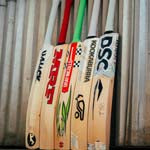
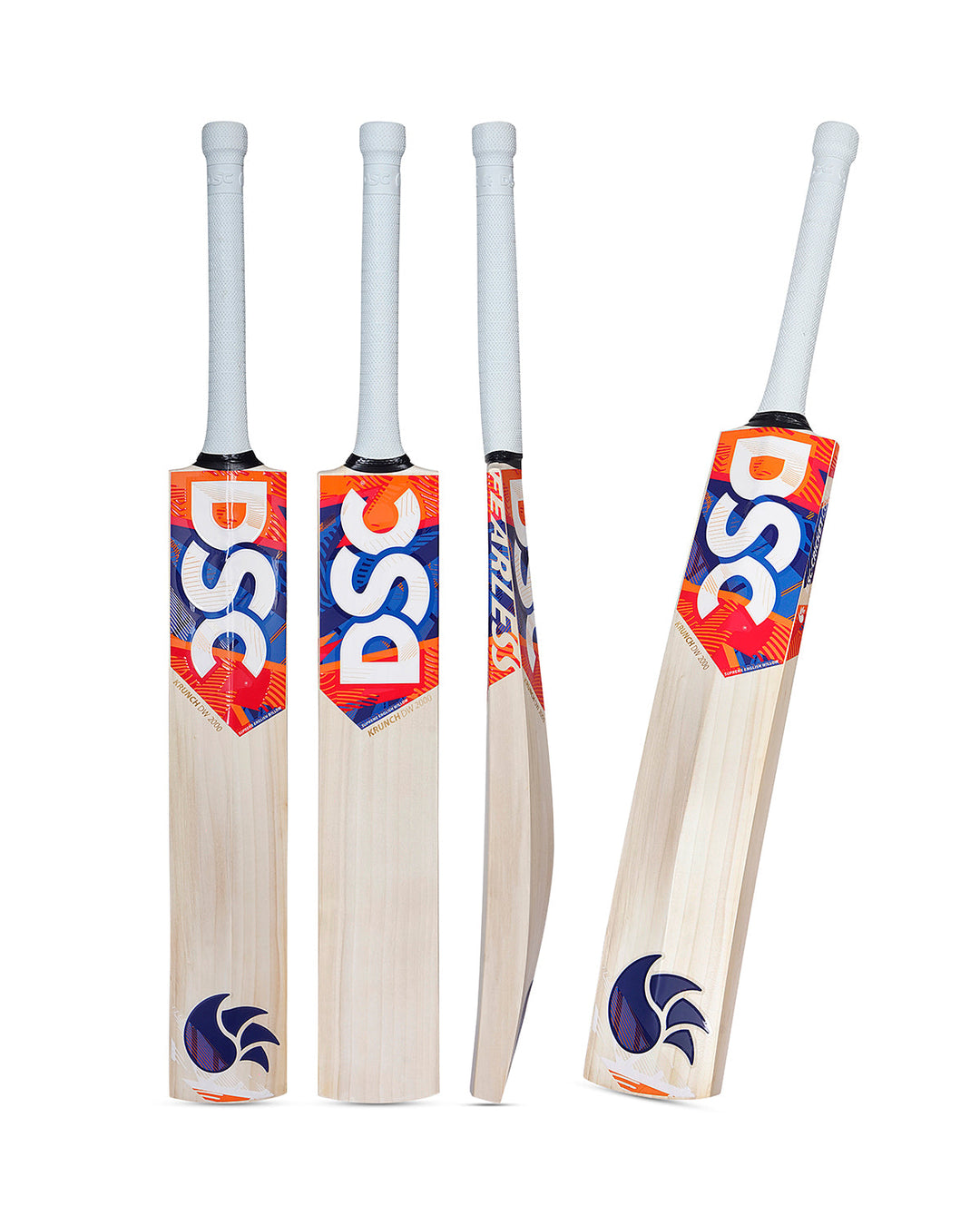
At the same price point, there is no major performance difference between leading brands such as Gray-Nicolls, Kookaburra, GM, or DSC. What you’re paying for is the quality of the willow.
Different brands specialise in different bat shapes, handle types, and sweet spot positions.
Our advice:
Ignore the sticker on the bat (at least at first). Focus on pick-up, weight, and sweet spot. A bat that suits your game will always outperform a bigger-name bat that doesn’t.